Wednesday, December 5, 2012

Carlitos. Edgar.

You know the feeling. Jerk out of sleep, heart pounding like you've been running across the desert while your brain tries to orient itself. It wasn't real wait, yes it was, I felt it, they're here--where? Bed. Walls. Faint light. No, no, no not real. Just a dream.

It was probably not the best idea to read that story right before I fell asleep, the true story version of La Misma Luna that doesn't have a happy ending. Edgar Chocoy, only a little older than Carlitos, came to the United States in search of his mother who had left when he was 6 months old. He was Guatemalan, and was fleeing his old gang that swore to kill him because he abandoned them in search of a better life. He was arrested here, begged to stay but was sent back, even though his aunt in Virginia had offered to take him. Seventeen days after being deported, he was shot. (Greg Campell, Death By Deportation) Read the story.

Then I dreamed. I didn't like it. We were being chased and it was scary. I didn't know where my friends were. I woke up just as the people were catching us. Bed. Walls. Faint light. My brain tried to shake it off but I couldn't get rid of the memory that whoever was chasing me saw me as only an object. I didn't like it.

Turns out my dear old brain does some insightful pondering while I sleep because my waking self realized this is the root of The Problem:

Objectification.

"This isn't really the time to be having bad feelings, David. We're here."
"I just don't think it's worth it."
"Is it worth your tuition?"

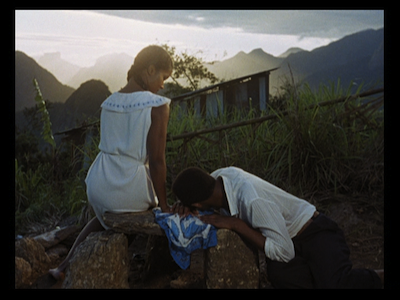
(La Misma Luna, 2007, directed by Patricia Riggen)

This quote is evidence that the smugglers in the film view Carlitos simply as a means to pay tuition. But they're not the only ones who objectify him. Carlitos is viewed over and over again in La Misma Luna as nothing but an object that people can profit from. First by his aunt and uncle, then the smugglers, the drug addict guy, the creepy man who tried to buy him, even Enrique only saw him as a troublesome tag-along at first. Rosario is also viewed as an object by her employer who felt she was expendible and was nothing more than a young, pretty face.

When we view people as objects, it is easy for us to see them as a means to an end. Oh hello, Levinas! Didn't see you sneaking up there. We slap that label on and they become a rock in our path. It's a terrible pandemic, the virus that makes you lose your humanity. It's the reason that Edgar Chocoy was sent back, even though he would have done well here. He was an object that would clutter America, an "illegal."

No. He was a child of God, just like you and me.

How will we cure this pandemic?

Thursday, November 29, 2012

Sisters

"Nenny and I don't look like sisters . . . not right away . . . . But me and Nenny, we are more alike than you would know."

--(Sandra Cisneros, The House on Mango Street, 17)

This line is the story of my life.

My sister Tesia is two years older than me and does not look like me at all. Period. She's small with darker skin than me, brown hair, and caramel eyes. I'm tall, blonde, blue-eyed, white. (Ok, you can't really see it in this picture cause she's wearing high-heels and the flash makes us look almost the same color...)

When people find out we're sisters, they never believe us. Latinos have nicknamed her "the brown girl," which I couldn't figure out because they are waaay darker than she is. But then I realized that they thought it was weird that we didn't look like each other because when Latinos have babies, they all have brown skin with dark hair and dark eyes. They don't get some blonde kids and some brown-haired kids.

But even though we don't look alike, we think exactly the same way. Sometimes its really freaky how similar our brains are. It's almost like we're the same person, and yet, we're really different at the same time. It's a weird phenomenon. 

When we sing, our voices blend together really, really well. Even though we don't have the same voice. It's a weird phenomenon.

We like the same things, but our personalities are very different. It's a weird phenomenon.

Anyway, I feel like this theme of being really similar and yet so different applies to me and Esperanza as well. I have never been an immigrant in a community surrounded by lots of other Hispanics. But I have felt what it's like to be a girl growing up. I'm not a Chicana, but I grew up with a mixture of cultures too. I didn't grow up in a city, but I have felt the strain of poverty around me. I just felt a connection to her as I read The House on Mango Street. We're similar and yet very different at the same time.

Esperanza and I don't look like sisters . . . not right away . . . . But me and Esperanza, we are more alike than you would know.

Thursday, November 22, 2012

The Physical Body

Honestly, I can't just pick one thing that we've learned about this semester that is my favorite.

I feel like IHUM 260 has taught me how to live a life that is complete and balanced. It's taught me about relationships and people. What makes people work. The things that are important to me. What makes me happy. What drives me. What was it Anaya said? Something about books being a mirror into your own soul? I feel like this class has revealed a window into my soul. I've learned so much and I love all of it. But I've tried to pick a highlight.

I LOVE Latin music and dancing. The story that Professor Mack shared about the visiting guy that had a random Latin girl dance for him and then she left really impressed itself on my mind. Yeah sorry, I can't remember any details cause it was so brief. But it impacted me. I thought a lot about the guy's musings about how sensuality isn't always about sexuality, it's about being alive and cherishing it.

These thoughts created a circle when we started discussing physicality during Bless Me, Ultima and the very physical descriptions by Antonio, as well as the discussion about how our memories are tied up in our physical being. It makes me really, really appreciate my body. I mean, that is why we came to Earth, after all. We came to gain a body. So here's the circle connecting dancing and Bless Me, Ultima's physicality: living is a very physical thing that you have to have a body for. When you're a child it's easier to be aware of it. And I feel that dancing is a celebration of having a body because you're so aware of it. Being alive isn't just about increasing our intellectual capacity and agency and all that, although those are vital, it's about having a body and learning how to control it and enjoy it. Yup, those are my Thanksgiving break musings :) I like it.

Thursday, November 15, 2012

Man vs. Woman

"I had cleansed myself completely and prepared to take God into my body. Since the confession I had talked only to Ultima and to my mother. I had kept myself pure."

(Rudolfo Anaya, Bless Me, Ultima, 219)

Sooo...young man Antonio, trying to be a good boy and grow up right, thinks that keeping himself pure allows him to only speak with  his mother and Ultima. Why?

There's an interesting theme contrasting men and women in this book. Gender roles, perceptions, characteristics. (Whoa, apparently it's not safe to search for Adam and Eve on the internet. Lots of sketchy stuff.) Um, where was I...oh yes, so I feel like there's a general list of qualities that are associated with men and women. Let's compare and contrast.


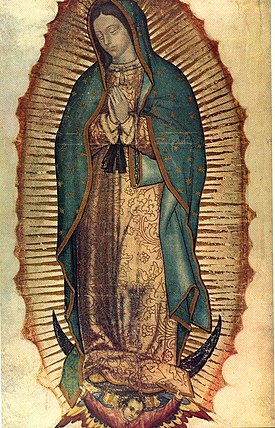
La Virgen Guadalupe and God, for starters. La Virgen is kind and forgiving to all. She's a comforter to Antonio. A woman. God on the other hand, is stern and unyielding. He's condemning and not very compassionate. Man. In one of my classes (was it this one? I can't remember...) we talked about how when the indigenous people were conquered, they felt that their male gods (the gods of war and stuff) had rejected them so they turned to the comfort of their female gods. That's why the Spaniards found that it was easier to attach them to the Virgin Mary rather than God himself. They could relate with her better because they associated her with the qualities of their female gods. Their male gods were more harsh like Antonio's perception of God. All this stuff is rooted in history but it's still being shown today in modern literature.

Ok, now Antonio's parents. His mother is really loving and espiritual and prays all the time while his father is ok with drinking a lot and isn't such a fan of religion. And as Antonio continues to grow, he is coming to see what men are like. His brothers aren't exactly the ideal examples to strive to become.

Then we have the younger generation, all the crazy boys and the much less crazy girls, although some colorful words slip into their language too sometimes. The boys are little tornadoes trapped in little bodies while the girls are mostly angelic, especially when the priest is present.

So what I want to know is what is Anaya saying with these themes? Are women generally perceived as being naturally holy while men are just stuck being sinners? Is Antonio an exception to this rule or is he just still growing into being a sinful man? Hmm...

Thursday, November 8, 2012

Hatred. Why? Why???

"Why are they like that?" I asked Cico. . . .

"I don't know," Cico answered,"except that people, grown-ups and kids, seem to want to hurt each other."

(Rudolfo Anaya, Bless Me Ultima, 111)

Deep topic today, guys. I read this quote earlier today and it kind of struck me, probably because this is one of my biggest frustrations with the world. I knew that I needed to blog about it but I wasn't expecting it to be brought home so immediately through an experience I had shortly after I read it.


So I got home from school today, went to do homework, and got distracted by Facebook. Of course. As I was scrolling through my Newsfeed, a post in Spanish caught my eye about the election. Not a big deal, everyone is posting about it right now, but I started reading it and found it was from a not-so-typical point of view.

The author is a man from Mexico called...(codename) Juan. Juan's post began by drawing an interesting comparison, I thought, about the millions of dollars that Romney has spent, the many hours of time lost, the  hard work, the stress that he's dealt with--all for nothing. He compared it to the money and time and hard work and stress that immigrants face as they cross the border through the frontier--all for nothing when they are captured and returned to Mexico, worse off than when they started. It was a thought provoking idea. Then he gave his opinion about why Romney lost, etc, etc, and said that although there are different social classes, the upper classes depend on the lower classes to get where they are and the lower classes depend on the higher classes. We all depend on each other. He said.

Juan said that Latinos played a major part in Obama's victory. However, he feels that the time is quickly coming that it will be a Latino who will lead the nation. (Opinions are fine by me. Everyone can have their own.) But then he said one of the most racist things I have ever heard.

"Soon the bronze generation, the Latinos, will rule over the whites--the pale-faces, gentiles, whatever you want to call them."

I was stunned.

I was hurt.

Everything that I've been working towards to remove racism from our society, especially against Latinos, was thrown back in my face from one of the very people I love so much. His desire to "rule over" white people was bringing the stupid history of racism full circle. His words showed that he didn't believe in depending on each other at all--it's about being on top, controlling others. Judging people based on the color of their skin.

I. Hate. Hatred. Why do people try so hard to hurt each other???

I don't know the answer. I don't get it. Maybe I'm like Antonio--childlike and naive--but what I do know is that the only way to overcome hatred is through love. With love the world is a beautiful place where the color of your skin makes you beautiful.

Thursday, November 1, 2012

My Carnival

K, so I watched Black Orpheus and bam--a ton of the "Carnivalesque" themes. For instance, the mixing of Brazilian culture with Greek myths. Then there was a mix of modern culture with this old voodoo/witchcraft/seance stuff. Then there was the circular meshy pattern of events without much exposition or climax or denouement. It was very in your face--Samba. Boom, we love each other--samba--even though we just met. Samba. Death appearance! Whoa! Samba. Boom, she's dead. Samba. Boom, he's dead. Samba. Someone else picks up the guitar--samba--to continue the story. Samba.

Inspiration for a connection: It just so happens that every time I hear the word "carnival" this salsa song starts playing in my head.

(Note the people clapping son clave)

Connection: As Celia says, "La vida es un carnaval." So as this song was playing in my head I thought to myself, "How is my life carnivalesque?" And it came to me...the dialogue in my life is between my Swedish/Alaskan/aka super white side and my Latin side. Let me tell you, it is quite the dialogue. It is a mixing of hard working, purpose-driven, introverted me with life-loving, carefree, extroverted me. However, like in The Kingdom of this World and Black Orpheus, some interesting, unexpected things come to pass in this discussion.

For example, when I finished my mission I was told that nice young men would be falling over themselves to date me. But in reality, 98% of guys that have asked me on dates since I've been home have been:

A) Nonmembers
B) Less-active members
C) Sketchy
D) Predatory
E) Latinos (which isn't bad by itself, because I like Latinos. But in this situation it's just funny)
F) Pretty much all of the above, somehow

Yeah, I wish I was joking. I'm not. But I have managed to evade all the sketchy dates. Weird things happen at Carnival. Weird things.

But the up-side is that my Latin dialogue discusses how great life is with lots of fun Latin friends and dancing and food and my responsible white dialogue agrees, at the same time keeping my Latin side balanced while living in this messy world. And it's healthy. Life is just a party when its working right. It's a carnival.

Wednesday, October 24, 2012

Latin Dancing Expresses the Love of Being Human.


Wow, so I don't even know where to begin. I just love Latin music and dancing so much! It embodies everything I love about Latin culture: the vivacity, the happiness, the boldness, the spontaneity, the energy, the joy of living. I just LOVE it! It's so great!

I discovered Salsa dancing when my sister married the Salsa club teacher at Utah State and brought him home a few years ago. It changed my life. No, but it really did cause I'm pretty sure Salsa dancing was my first exposure to Latin culture, being from Alaska and all. In fact, I'm fairly certain I didn't see a real-life Latin person till I was like...in college probably. You think I'm joking but I'm not. I'm actually really glad it happened that way because it gave me the chance to fall purely in love with the culture without getting influenced by a lot of the negative perceptions out there. And now, a few years later, here I am with my entire career plan centered around Latin people! All because of Latin dancing.

I'm definitely not the best salsa dancer (probably because I don't show enough bare midriff), but I feel waaaay more legit now that I know what son clave and tumbao are. People would always start clapping out son clave when I went dancing but I just thought it was this special rhythm that manifested their natural Latin-ness. And now I can manifest that I'm a Latina too! It's just a richer touch to the expression of love of life through dancing.

The point is, don't you want to celebrate being human too? Great! Here's your chance to bring out your Latin side :) There's a Latin dance on Friday, November 2, 2012 at 8:30-11:15pm in the Wilk Ballroom and you need to be there. So here you go :) You can find more moves where this came from at...Youtube! Plus you never know what you'll find at a Latin dance: a career, true love...who knows. It's a magical place!

And let's be honest, it's the best way to study the humanities.

Thursday, October 18, 2012

"¡María Candelaria!" "¡Lorenzo! ¡Lorenzo Rafael!"


Once upon a time when I was a freshman in college, I took a class called Intro to film. And it rocked. Unfortunately, it has been quite some time since that class and I'm afraid that with my abstinence from movies for 18 months on my mission, I have forgotten how to actively watch movies. So I'm a little bit rusty with analyzing them.

While you keep this valid excuse in mind, I'll confess that when the ending of Maria Candelaria wound down, I was left with the following feelings: 

A) "Wait, whaaaaaat???"
B) Depression

I mean, yeah the cinematography was great and yeah, the Taj Mahal, I mean, Dolores del Rio did a pretty good job acting/looking flawless but I didn't really get the point of the movie. But between then and now I've been pondering over the theme of Maria Candelaria and this is a major one I picked out: Innocence/Pure Love. Alright, alright, I guess it does count as two. Innocence and pure love.

Sooo in class we talked about how parallels were drawn between Christ and Lorenzo Rafael and between Maria Candelaria and the Virgin Mary. I was like, "Yeah, yeah. I see it--wait, um, no, Lorenzo Rafael stole stuff. That's not like Christ." But then I continued musing about it and have gained some insight.

                                        Christ in Gethsemane Framed Tile
(By the way, when Lorenzo Rafael is in jail and the light is shining on him, this is the painting I thought of.)

The strongest qualities that I noticed about Maria Candelaria (why do they always say everyone's full name in the movie?? I don't know. But I'm going to do it too.) and Lorenzo Rafael was their innocence. It went beyond being naive of the world, they were like children. Pure children, which explains why they didn't do anything when people did bad things to them. They were incapable. It also explains why Lorenzo Rafael can get away with stealing stuff from a store and yet is still pure. Yeah, it wasn't the best thing to do but his motives were pure. He only wanted Maria Candelaria to get better and he only wanted to be able to marry  her because he loved her. With pure love.

Their innocence also fulfilled the meaning of Maria Candelaria's name--bringer of light. The painter gained redemption, aka repented, aka changed, because he had known her. I think that when we come in contact with people with pure hearts our lives are uplifted because it gives us a view of the world as it should be. And that's what Maria Candelaria gave to the painter.

Wednesday, October 10, 2012

Fathers and Sons

Justino got up from the pile of stones which he was sitting on and walked to the gate of the corral. Then he turned around to say, "All right, I'll go. But if they decide to shoot me too, who'll take care of my wife and kids?"

"Providence will take care of them, Justino. You go there now and see what you can do for me. That's what matters."


--------------------

"Guadalupe Terreros was my father. . . . They told me he lasted more than two days and that when they found him, lying in an arroyo, he was still in agony and begging that his family be taken care of."

(Rulfo, Tell Them Not to Kill Me!)

I'll be honest, this story was kind of painful to read because it portrayed such a sad relationship between Juvencio and Justino! What kind of father tells you to possibly abandon your family because his life is more important??? A bad one! That's who! This guy is repulsive. And poor Justino gets to see the contrast between his relationship with his father and the relationship of Don Lupe and his son's relationship:

Juvencio Nava was willing to risk his son's life to have a chance of surviving. Don Lupe was mortally wounded and would not let himself die until he was sure his family would be taken care of. 

Pretty stark contrast.

Unfortunately, strained relationships between fathers and sons is a pretty common problem, as shown in the media today. Here are just a few pop culture examples that came to mind.

1. Faramir and Denethor in Lord of the Rings. Faramir loves his father and would give his life to gain Denethor's love but...Denethor's a jerk.


2. Buddy and his daddy in Elf. Buddy only wants his father to be proud of him. 


3. Tommy (and his brother Brendan) and their dad in Warrior. Tommy and Brendan's dad basically caused their family to fall apart.


And although these are just a few examples, Rulfo's story shows that this problem is universal. Why is it such a common problem? Wouldn't the world be a better place if father's would just love their sons?

Wednesday, October 3, 2012

Faith in a Fortune Teller? Sketch.

"But the woman, the cards, her dry, reassuring words, and her goodbye--"Go, go, ragazzo innamorato," and finally, that farewell barcarolle, so lively and gracious,--such were the new elements which, together with the old, formed within him a new and abiding faith." (Joaquim Maria Machado de Assis, The Fortune Teller)

Bam! There it is, the
                                    true
                                        downfall
                                                           of
                                                               Camillo.

The silly man had apparently never read Alma's explanation of faith!

"And now as I said concerning faith--faith is not to have a perfect knowledge of things; therefore if ye have faith ye hope for things which are not seen, which are true." (The Book of Mormon: Another Testament of Jesus Christ, 289)


Camillo, like so many people before and after him, wanted something to reassure him and let him know that everything was going to be alright. Human experience, right? Everyone wants to know it's gonna be ok. You want it, I want it. Unfortunately, human experience also teaches us that when you place your faith in sources that are not true, you lose in the end, as Camillo found out.

It just doesn't work out so well if we place our faith in things other than Christ. We'll just be disappointed in the end. It reminds me...

Once upon a time there was once a man named Symonds Ryder who apostatized from the Church because of a misspelling of his name by the Prophet Joseph. (That wasn't the entire reason he apostatized, but that was his excuse.) Like Camillo, he placed his faith in a person and was disappointed. Point is, no one's perfect. And imperfect beings will disappoint every once in a while.

The only perfect source for our faith is Christ. It's just a shame, really, that Camillo picked such an imperfect person to put his faith in, haha.

Wednesday, September 26, 2012

Poty is a Pony

"The daughter of Araken then went and sat afar off on the root of a tree, like the solitary doe who has been driven forth from the sunny plain by her ungrateful mate. The Pytiguára warrior disappeared in the thickest of the foliage." (Alencar, Iracema, 60)

AWKWARD!!!! That feeling when the third wheel is witnessing a lovers' quarrel, blech. I would disappear too. But I'm not really blogging about this. I just needed to get that out...

"Hunting and excursions in the mountains with his friend by his side, the tender caresses of the wife awaiting his return. . . " (Alencar, Iracema, 83)

Professor Mack asked last week if there were any Louis L'amour fans in the class. I do like Louis L'amour but my mind was having a debate if I met the qualifications to be a fan or not and my opportunity to be one passed. But I think it brought cowboys to the front of my mind so when I read this line, all I could think of was this nice cowboy song I like from the John Wayne movie, Rio Bravo, that demonstrates this idea of being a manly man with his pal while his sweetheart waits faithfully at home.


It connects like this. Martim is the cowboy. Poty is his faithful pony pal (not much personality, but always reliable and he's there right when you need him). Iracema is obviously his sweet darlin'. Obviously. And his rifle...is...his...bow and arrow. Yeah, I don't know if that's as cool as a rifle but there it is.

What is it that romanticizes this idea of going out in the frontier with your weapons and your sidekick? I mean, I love westerns but I want to know why this concept is so appealing. There's this part of my brain that thinks that secretly all men would love to be a cowboy. I know my brothers would. Why do men love this idea so much? Why is it so manly?

Aaaand, why does Martim tire of it??? Is he not a real man? Or could it be it's because he was induced into this life by Iracema? Questions, questions...

Wednesday, September 19, 2012

Iracema, Hungry Like the Wolf!

"Iracema, the virgin with the honey lips, whose hair, hanging below her palm-like waist, was jetty as the Graúna bird's wing.
The comb of the Játy-bee was less sweet than her smile, and her breath excelled the perfume exhaled by the vanilla of the woods. . 
Fleeter than the wild roe, the dark virgin wandered freely through the plains and forests of Ipú. . . . Her subtle, naked foot scarcely pressed to earth the thin green garment with which the early rains clothe the ground." (José de Alencar, Iracema, 9)

Iracema. Iracema, the lovely Pocahontas/what's-her-name-from-Avatar figure. I was trying to imagine what it would be like to meet her and I couldn't think of anything to compare her to except...a wolf.

Wait, wait, wait! Stop thinking that is a super random comparison! It's not and I'll tell you why. It came to me because of my Alaskan heritage. So here it goes...


See? Do you see the resemblance? Ok, let me help you out. Wolves just have this majestic, natural, beautiful, yet deadly spirit to them. They are incredible creatures. They are just...like, really cool. And Iracema is like that. They both have this very pure, uncontaminated quality. They are both very intelligent. But even though both wolves and Iracema are beautiful and pure, I would not say that they are innocent. 

Wolves have the ability to be...not very nice. Sometimes they kill animals for sport when they don't need food. And we got to see a little bit of Iracema's lack of innocence. Getting Martim drunk? How angelic.

When Iracema was introduced, I felt kind of mesmerized by her grace and perfection, but she also has this really lethal side. Yeah, don't surprise her, you might get shot. And don't make a wolf mad, they might eat you up, as they say, haha. See the resemblance now?


Ohhh Martim! Where are you going, you White Warrior???

Wednesday, September 12, 2012

Levinas on Love

Sudden realization: I haven't blogged this week. Good thing that revelation just came to me...otherwise...my life would be no fun...

Ok, so in our class a week ago, Professor Mack brought up some neat philosophy from a French/Jewish philosopher named Levinas. Basically, his philosophy is that when we see people, we look at them in one of two ways: totality and infinity. I wanted to blog about this because it's been inspiring me with uplifting thoughts.

Totality
With a totality perspective, I see someone like a pie chart. For example, I met a guy at the bus stop yesterday. I asked him how he was doing. He said well. If I had a totality view, I would have thought, "Bingo! I know this guy half a percent! Only 99.5% to get to know! Cool!" So then I asked what his name is. It is Minh. (Sweet! 99% left!) And I continued talking with him. He's a finance major. (5% down. 95% left) He lives near me. (90% left! Yessss!) And I continued getting to know him with my objective of knowing him 100% coming closer and closer. And then, when I feel like I know him 100%, I can slap a label on him because I totally know him completely. Soo, I could say, "Minh is from Vietnam. Asian! I get him! *Assumption, assumption, assumption because I know Minh completely now*, blah, blah, blah..."

The unfortunate thing about totality view is that when I slap that label on, I stop seeing Minh as a person, I see him as an object. And that's bad.

Infinity
I see people as infinite beings. I can't label them because I understand that I can never really get to know them 100%. It's impossible. So I do my best to get to know someone, but not as an interrogator. I become familiar with them in gentle, loving ways. It just allows a lot more room for love.

Ok, so thoughts inspired by this philosophy:

1. First Thought: RELIEF. I don't know why, but when I make comments in class I'm scared because I feel like people will interpret my comments and make judgments about me. Ok, actually I do know why I'm scared. I'm just really bad at expressing myself so I feel like everything I say comes out wrong, therefore everyone will have a skewed perspective of who I am. But after this explanation, I relaxed a bit because I hope that people would view me as an infinite being and wouldn't slap a label on me from one comment. Yeah. Feel free to do it after you read my blog though...hahaha. Just kidding.

2. Second Thought: Relief again. But this one is different. I've been sort of at war with myself because I've been trying to determine what I should think of Hernán Cortés. I guess the viewpoint that I learned in school is that he was a heartless bad man that killed basically everyone in South America for gold. But sometimes when I read the excerpts from Victors and Vanquished, I come across things that are confusing.

"Indeed, when we least expected it, they came to say that [Montezuma] was dead. Cortés wept for him..." (Schwartz, Victors and Vanquished, 172)

Why would Cortés weep for someone that he was conquering? Did he love him? Or was it because it put  Cortés in a sticky situation? (There were more things but that was the only quote I could find right now.) So I guess the relief I feel is that I don't need to put a label on Cortés. Who am I to judge Hernán Cortés? How could I decide what kind of person he was because, honestly, I really, really don't know him at all. He's an infinite being and I have no idea what caused him to do the things he did.

This view from Levinas changed the way I look at people. Does this philosophy change how you see people too?

Tuesday, September 4, 2012

Working Class Hero

Well, I've already found out that I enjoy blogging and tweeting for my Latin American Humanities class much, much more than I was expecting. It's actually fun. Yes, fun.

"The modern worker lacks individuality. The class is stronger than the individual and his personality dissolves in the generic. That is the first and gravest mutilation a man suffers when he transforms himself into and industrial wage earner. Capitalism deprives him of his human nature...by reducing him to an element of the work process, i.e., to an object. And like any object in the business world, he can be bought and sold." (Octavio Paz, The Labyrinth of Solitude, 67)

Ok, I read this and I could not help but think of John Lennon's song, Working Class Hero. I'm including a link to the song but WARNING, the lyrics include some "bad words, the only living language in a world of anemic vocables," as Paz says. "Poetry within the reach of everyone." And Lennon uses a strong one twice. Just giving you a heads up!


In The Sons of La Malinche Paz delves deeply into exploring what creates identity. And when I say deeply, I mean DEEEEEEEPly. He demonstrates how the history of the Mexican creates his, mm, non-identity. Not his identity, because he may choose to deny his descent and recreate himself as just a man, whoever he wants to be, freed of any baggage that would come with his heritage. 

I think this quote demonstrates the risk that the Mexican still faces of having his humanity, his personality, dissolved by society...specifically by being an industrial wage earner.


So anyways, I thought of John Lennon's song because it expresses exactly the same thing that Paz's quote says. The song shows that the risk of having your humanity blurred by being in the working class is not only a problem that is limited to Mexicans. I think it is part of all societies. When the machine begins to take over, it kind of pushes itself along and bulldozes over individuals, turning them into objects. It's a weird world. 

But I think that if Paz has one thing right, it is that we are always capable of determining the way we view our identity. We are not objects at all, but beings that have resiliency and determination and are capable of overcoming any obstacles in our path. Period.

Tuesday, August 28, 2012

First Day Thoughts

First of all, I kind of hate the move towards social learning through blogging and twitter that I've been experiencing recently in my college classes.

It's not that I hate people. I love people. It's not that I'm introverted and hate being social. I like being social! I think it's because I'm just not the type of person who likes to spend a lot of time following people and magic unicorns and birds and farms on a computer. I'd just rather talk to someone's face than to a computer screen.

Yeahhhhhh.....no.

My dislike of social learning began last semester when I took a Shakespeare class and was required to blog at least twice a week for it. My first blog. I didn't like it at first because I wasn't exactly sure of what we were supposed to be doing with it...I don't know. I just had a hard time getting it. It was kind of a bummer cause I do enjoy Shakespeare...

Buuut, I'm not one who gives up at the first sign of a challenge, so I'm going to try again. I think I'll be more successful this time because even though I didn't always enjoy blogging last semester, it did give me valuable experience. Oh weird, I just realized that was a class learning outcome. Learn how to use social media. Well done, Professor Burton, well done.

It's weird though, because I thought I would be able to avoid all of this social media because it's just for social use, right? Wrong. I've only ever had to use it for academic purposes. When did this stuff start becoming academic??? What's next? Pinterest??


Pinned Image

On the other hand, I am SOOO excited to learn about Latin American humanities for the following reasons:
     A) I LOVE Latin America. The people, the culture, the music, the food, dancing...you name it.
     B) I really, really like art and stuff. I took my very first art class last semester and it was almost the best thing that's ever happened to me.

So, here goes! Whatever happens, it's gonna be good.